
Trade tensions between the United States and Canada are escalating again after the White House announced new restrictions on Canadian imports, including motorcycles, alcoholic beverages and several food products, as both countries intensify retaliatory measures against one another.
The latest U.S. import ban is scheduled to take effect on September 29, 2026, expanding a trade confrontation that has already affected billions of dollars in goods moving across one of the world’s largest bilateral trading relationships.
President Donald Trump signed executive orders introducing restrictions on a range of Canadian products. The measures cover larger-capacity motorcycles and mopeds as well as whey products, molasses, nonalcoholic beer and several categories of alcoholic beverages.
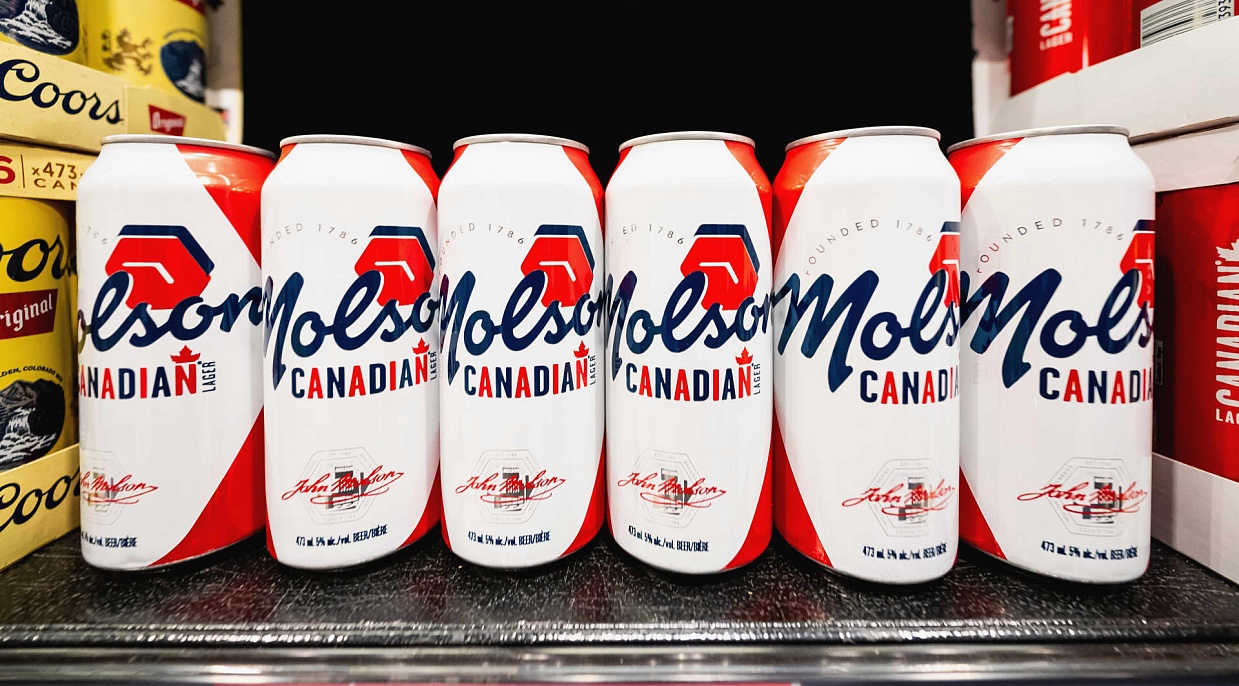
Malt beer, wine, cider, whisky and vodka are among the products targeted.
The administration is also modifying existing tariffs on Canadian goods. Changes scheduled to begin September 15 include adding all-terrain vehicles and animal hides to the list of affected products while removing rock salt and cement.
U.S. officials say the measures are intended to respond to what Washington considers discriminatory Canadian trade practices.
Canada, meanwhile, has answered with another round of retaliatory tariffs targeting approximately C$20 billion, or about $15 billion, worth of U.S. imports.
The rapidly expanding measures demonstrate how a dispute that initially focused on specific industries is developing into a broader confrontation involving manufacturing, agriculture, energy, alcohol and consumer goods.
White House Expands Restrictions on Canadian Goods
The latest White House action broadens the range of Canadian products facing restrictions in the United States.
Motorcycles are among the most notable additions because the restrictions target larger-capacity models as well as mopeds.
Food and beverage products are another major focus.
Canadian whey products and molasses will be affected, while the beverage restrictions cover both alcoholic and nonalcoholic products.
The inclusion of beer, wine, cider, whisky and vodka further intensifies a dispute in which alcohol has already become one of the most politically visible categories.
Existing tariffs are also being adjusted rather than simply expanded across the board.
All-terrain vehicles and animal hides are being added, while rock salt and cement will be removed from the tariff list.
This targeted approach allows the administration to increase pressure on selected Canadian industries while reducing restrictions in areas where tariffs may be creating unwanted costs for U.S. companies or consumers.
Washington Accuses Canada of Discriminatory Trade Practices
U.S. Trade Representative Jamieson Greer said the new measures are a response to what the administration views as Canada’s continued discriminatory treatment of important American exports.
The Trump administration has repeatedly criticized Canadian policies in several major sectors.
Automobiles, dairy products and alcoholic beverages have become particular sources of tension.
Trump has argued that American companies face unfair barriers when attempting to compete in the Canadian market and has used tariffs as a central tool for pressuring Ottawa to change its policies.
The administration’s approach reflects a broader trade strategy centered on reciprocity.
Rather than accepting differences in tariff structures or regulatory systems, the White House has increasingly sought to impose costs on trading partners that it believes restrict American goods.
Canada rejects the argument that its trade relationship with the United States is fundamentally unfair.
The result has been an escalating series of retaliatory actions.
Canada Responds With Tariffs on $15 Billion of U.S. Goods
Canada introduced its own tariffs on approximately C$20 billion worth of American products on the same day as the latest U.S. announcement.
The measures affect more than 700 categories of goods.
Products targeted by Canada include steel, dairy products, agricultural equipment, pulp and paper products and electronics.
Ottawa says the measures are retaliation for U.S. duties of 50% imposed on Canadian products including hockey sticks, wine and other goods.
The scale of the retaliation illustrates Canada’s attempt to spread the economic impact across multiple American industries rather than concentrating its response in one sector.
Tariffs can also be designed strategically to affect products manufactured in politically important regions, increasing domestic pressure on the government responsible for the original trade measures.
However, retaliatory tariffs carry costs for the country imposing them as well.
Canadian companies importing American machinery, materials or consumer goods may have to pay more, potentially passing those costs on to customers.
That makes prolonged tariff disputes economically painful for businesses on both sides of the border.
Trade Negotiations Have Broken Down
The latest escalation follows the collapse of negotiations between Washington and Ottawa.
Both governments have blamed the other for failing to address unfair trade practices.
The Trump administration has focused heavily on access to the Canadian automobile, alcohol and dairy markets.
Canadian officials, meanwhile, argue that the country’s trade policies are legitimate and that U.S. tariffs unjustifiably punish Canadian exporters.
The disagreement has made compromise increasingly difficult.
Tariffs that initially function as negotiating tools can become politically harder to remove once businesses and governments adjust to them.
Each new round of retaliation can also encourage the other side to respond again, creating the risk of a prolonged trade cycle.
That possibility has become increasingly important as another major deadline approaches.
Trump Threatens 50% Tariff on Canadian Vehicles
The automobile industry could become the next major battleground.
Trump has threatened to impose a 50% tariff on Canadian cars, trucks and automotive parts beginning January 1, 2027.
Such a measure would represent a much more significant escalation because the North American automotive industry is deeply integrated.
Vehicles assembled in Canada and the United States frequently contain components that cross the border multiple times during production.
A tariff on Canadian automobiles and parts could therefore affect not only Canadian manufacturers but also U.S. factories that depend on Canadian components.
Higher import costs could eventually translate into more expensive vehicles for American consumers.
Automakers could also face pressure to reorganize supply chains, relocate production or seek alternative suppliers.
Those changes can take years and require substantial investment.
Carney Defends Canada’s Position
Canadian Prime Minister Mark Carney has pushed back against Washington’s characterization of the bilateral trade relationship.
In August, Carney argued that the U.S. merchandise trade deficit with Canada largely reflects America’s substantial purchases of Canadian energy.
Canada is a major supplier of energy to the United States, including oil and other resources.
Because the United States purchases large quantities of Canadian energy, the headline trade balance can appear significantly tilted toward Canada.
Carney has also emphasized that Canada is an important customer for American industries.
Canadian consumers and businesses purchase large quantities of U.S.-produced vehicles, steel and other products.
The prime minister has acknowledged that retaliatory tariffs create economic costs.
However, he has argued that the measures are necessary to defend Canadian companies, workers and communities from U.S. trade restrictions.
$715 Billion Trade Relationship Faces Growing Uncertainty
The tariffs currently affect only a portion of the approximately $715.5 billion in annual goods trade between the United States and Canada.
However, the economic impact cannot be measured solely by the total value of products covered.
Even relatively targeted tariffs can create significant problems for individual companies.
Small and medium-sized businesses may be particularly vulnerable because they typically have fewer resources to absorb sudden increases in costs or redesign supply chains.
Importers must determine whether products are covered by new tariff classifications, calculate additional duties and potentially negotiate new contracts with suppliers.
Exporters may suddenly find their products significantly more expensive in their largest foreign market.
Companies also face uncertainty about whether tariffs will remain in place, increase further or eventually disappear.
That uncertainty can discourage investment.
Businesses may postpone hiring, factory expansions or long-term supply agreements until trade policy becomes clearer.
Companies Face Immediate Compliance Costs
Justin Angotti, an associate at international law firm Reed Smith, noted that companies must now wait to see whether the latest tariffs are maintained, expanded or eventually reduced.
But businesses cannot simply wait without incurring costs.
They must adapt immediately to changing customs rules and tariff classifications.
Legal advice, compliance procedures, customs documentation and supply-chain adjustments can all create additional expenses.
Companies may also begin looking for alternative suppliers or markets.
While diversification can reduce exposure to future trade disputes, replacing established commercial relationships is rarely simple.
Suppliers must be evaluated for quality, reliability, pricing and regulatory compliance.
For businesses operating with narrow profit margins, even relatively modest tariff-related expenses can have a significant financial impact.
Canada Looks Toward Europe
The deterioration in relations with Washington is also influencing Canada’s broader international strategy.
Ottawa has been seeking closer commercial and security relationships with the European Union as it attempts to reduce dependence on the United States.
Geography and decades of economic integration mean the U.S. will remain an exceptionally important Canadian trading partner.
Still, persistent tariff disputes can create incentives for governments and businesses to diversify.
Expanding trade with Europe could provide Canadian exporters with additional markets while strengthening political relationships outside North America.
Such diversification would take time, particularly for industries built around integrated U.S.-Canadian supply chains.
Alcohol Becomes a Symbol of the Trade Conflict
Alcohol has emerged as one of the most visible areas of the dispute.
Canadian provinces have removed American alcoholic beverages from store shelves, while public campaigns have encouraged consumers to avoid U.S.-made products.
These actions can have an impact beyond formal tariffs.
Consumer boycotts and government purchasing decisions can reduce sales even when products technically remain available.
Saskatchewan Premier Scott Moe introduced a 50% tariff on American imports in August as part of reciprocal measures intended to support local businesses.
The dispute has already had a dramatic effect on U.S. alcohol exports.
According to the Distilled Spirits Council of the United States, American spirits exports to Canada declined by more than 70% year over year between March and December 2025 after Canadian restrictions began.
For American distillers, losing access to a major neighboring market can be particularly damaging.
U.S. Spirits Industry Calls for a Deal
Chris Swonger, president of the Distilled Spirits Council, has called for a negotiated solution between the two governments.
The industry favors returning to a “zero-for-zero” tariff arrangement in which both countries eliminate tariffs on distilled spirits.
Alcohol producers have strong incentives to seek compromise because retaliatory measures can rapidly damage established distribution networks.
Canadian consumers have historically represented an important market for American spirits, while Canadian whisky and other beverages have significant demand in the United States.
Restrictions therefore hurt producers on both sides.
The industry’s experience also demonstrates one of the broader problems with trade wars: businesses that had little role in creating the political dispute can become some of its biggest economic casualties.
U.S.-Canada Trade Relationship Enters a Critical Period
The new import restrictions scheduled for September 29 represent another escalation in an increasingly complicated trade confrontation.
For now, the measures cover a relatively limited portion of the enormous commercial relationship between the two countries.
But the direction of policy is becoming increasingly important.
A 50% tariff on Canadian vehicles and auto parts in January would dramatically raise the economic stakes.
Businesses are therefore watching not only the tariffs already announced but also the possibility that the dispute expands into industries with deeply integrated cross-border supply chains.
Both governments argue that their actions are necessary to protect domestic industries and respond to unfair treatment.
Yet the longer the confrontation continues, the greater the risk that tariffs, retaliation and uncertainty begin producing broader economic consequences.
For American and Canadian companies caught in the middle, the immediate challenge is adapting to another round of restrictions while preparing for the possibility that North America’s largest bilateral trading relationship becomes even more difficult in the months ahead.