
The National Football League is preparing to take another major step in its international expansion as Commissioner Roger Goodell continues to outline a long-term vision for transforming the NFL into a truly global sports organization.
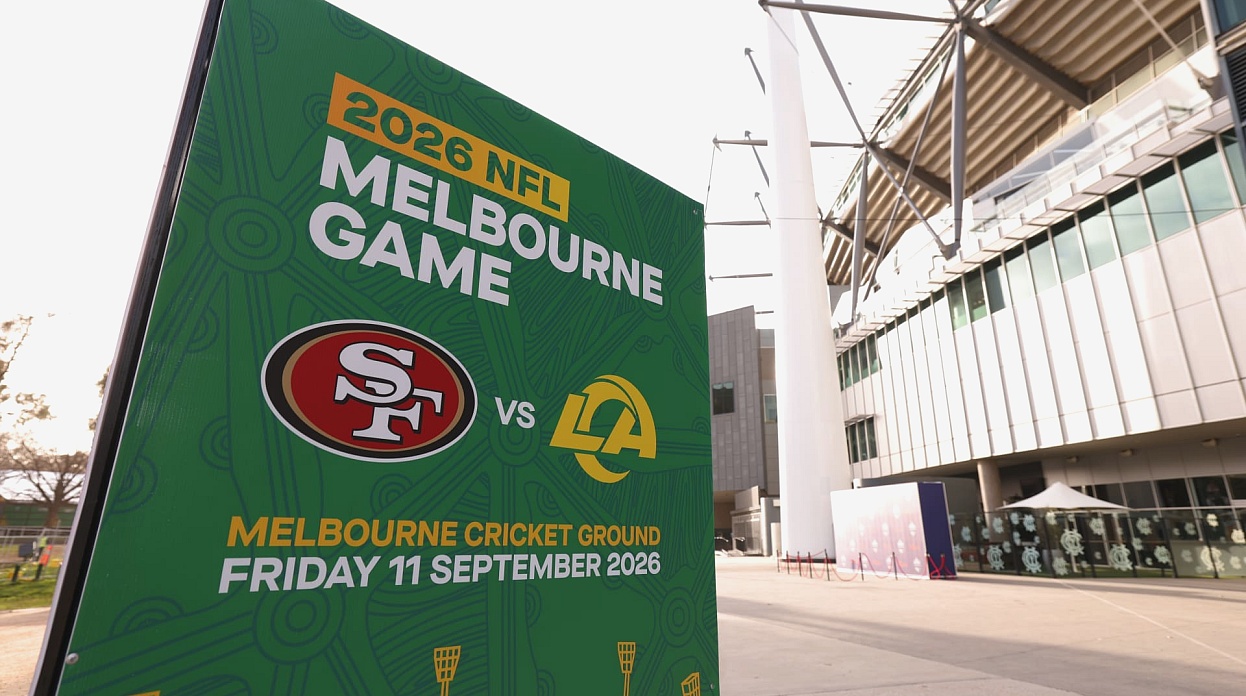
One of the most significant milestones in that strategy will come when the league stages its first regular-season game in Australia. The San Francisco 49ers and Los Angeles Rams are scheduled to meet in Melbourne during Week 1, bringing regular-season NFL football to the Australian market and opening another chapter in the league’s decades-long effort to expand beyond the United States.
The Melbourne matchup is more than an isolated international event. It represents part of a much broader strategy that includes additional overseas games, international marketing programs, global media partnerships and, potentially, NFL franchises permanently based outside the United States.
Goodell Takes a Long-Term Approach to the NFL’s Future
Goodell has emphasized that running a league as large and complex as the NFL requires executives to think far beyond the next season.
Major decisions involving television and streaming rights, collective bargaining agreements, stadium construction, international expansion and commercial partnerships can take years to develop. As a result, Goodell believes NFL leadership must consistently operate with a five-, 10- or even 15-year perspective.
That long-term philosophy has become increasingly important as the league explores opportunities in markets where American football has traditionally had a smaller presence than sports such as soccer, rugby or cricket.
Goodell’s own future with the NFL also provides some continuity for that strategy. The commissioner recently signed a four-year contract extension that will keep him in the position through March 2031. By that point, he will have spent approximately 25 years as NFL commissioner after taking over the position in 2006.
His extended tenure could allow him to oversee several of the league’s most important strategic initiatives, including negotiations surrounding the next collective bargaining agreement and further development of the NFL’s international business.
NFL Plans More International Games
International games are expected to become an increasingly important part of the NFL schedule.
The league plans to stage nine international games in 2026 and is targeting 10 games in 2027. However, Goodell has suggested that his ambitions extend considerably further.
One potential long-term objective is to eventually play as many as 16 regular-season games outside the United States.
Such a schedule would effectively create an entire week’s worth of NFL games on international soil, demonstrating just how significant overseas markets could become to the league’s future.
There are, however, contractual limitations.
Under the current collective bargaining agreement between the NFL and the NFL Players Association, the league is limited to 10 international games per season. Expanding beyond that number would therefore require negotiations and agreement with the players.
The existing labor agreement expires in 2031, the same year Goodell’s latest contract extension ends.
That timing could make the next round of labor negotiations particularly important for the future of the NFL’s international strategy.
International Travel Remains a Challenge for Players
Expanding the NFL internationally also presents logistical and physical challenges.
NFL players already compete in a demanding 17-game regular season, and international travel can add additional strain. Long flights, significant time-zone differences and disruptions to training, recovery and sleep schedules can make overseas games more complicated than standard domestic road trips.
These concerns become even more significant when teams travel to distant destinations such as Australia.
Nevertheless, Goodell has argued that many modern NFL players are increasingly comfortable with international travel.
Younger generations of players have grown up in a more globally connected sports environment and frequently travel internationally during the offseason. Many also recognize that international games provide opportunities to expand their personal brands and reach new audiences.
For star players in particular, appearing before international audiences can create commercial opportunities that extend beyond football.
The challenge for the NFL will be balancing those opportunities with competitive fairness and player health.
If international games become substantially more common, scheduling decisions, recovery periods and travel logistics will likely become increasingly important parts of the league’s planning process.
Building Fans, Not Simply Hosting Games
The NFL’s international ambitions extend well beyond bringing American teams into foreign stadiums for occasional games.
A major component of the strategy is the league’s Global Markets Program, which gives NFL clubs marketing rights in selected international territories.
Every NFL franchise now holds rights in at least one international market, allowing teams to develop commercial relationships, organize fan events, create local content and work with sponsors in those regions.
The objective is to create deeper connections between individual NFL teams and international fans.
For example, instead of a fan simply following the NFL as a league, international marketing efforts can encourage supporters to develop long-term relationships with specific franchises.
Goodell has acknowledged that the league continues to adjust and improve the program.
Simply hosting a game in another country does not automatically create a sustainable football market. The NFL must remain active before and after the event if it wants casual spectators to become committed fans.
That requires cooperation between teams, local sponsors, broadcasters, media organizations and community programs.
International games can generate attention, but the broader infrastructure surrounding those games is what could ultimately determine whether the NFL establishes lasting audiences.
Could the NFL Eventually Have Teams in Europe?
Perhaps the most ambitious part of Goodell’s international vision is the possibility of permanently locating NFL franchises outside the United States.
The concept has been discussed for years, particularly regarding London and other major European cities.
Goodell has continued to leave that possibility open.
Rather than imagining only a single international franchise, the NFL could eventually consider multiple teams based overseas. A group of European franchises, for example, could reduce some of the logistical problems associated with having one isolated team repeatedly travel between Europe and the United States.
In a much more ambitious scenario, international expansion could eventually lead to divisions consisting of teams based outside America.
That would fundamentally transform the NFL.
Instead of international games being special events, teams could potentially compete overseas on a weekly basis as part of the league’s normal schedule.
Goodell has not announced a timeline for such an expansion, and significant obstacles remain.
Permanent international franchises would require solutions involving travel, taxation, player contracts, free agency, stadium infrastructure, scheduling and competitive balance.
Players would also have to be willing to live and work overseas for extended periods.
Still, the fact that permanent international franchises remain part of the league’s strategic discussion demonstrates how dramatically the NFL’s global ambitions have evolved.
Australia Opens Another Major Market
The upcoming 49ers-Rams game in Melbourne is especially important because Australia represents a different type of opportunity for the NFL.
The league has already established a substantial presence in Europe, particularly through games in London and Germany. Australia allows the NFL to test its ability to build deeper engagement in the Asia-Pacific region.
Australian sports fans are already familiar with physically demanding contact sports through rugby league, rugby union and Australian rules football.
That could provide the NFL with an audience capable of appreciating many of the athletic and tactical elements of American football.
At the same time, the enormous distance between Australia and the United States makes the market one of the most challenging destinations from a scheduling and travel perspective.
The success of the Melbourne game could therefore provide valuable information about how the league approaches other distant international markets in the future.
Media Partnerships Are Essential to Global Growth
Physical games are only one part of the NFL’s international strategy.
Media distribution may ultimately be even more important.
For the Melbourne matchup, Netflix holds global broadcast rights, reflecting the NFL’s growing willingness to work with streaming platforms alongside traditional television networks.
Digital platforms give the league the ability to reach audiences in countries where NFL games may not receive extensive coverage from traditional broadcasters.
The league has increasingly experimented with different media partners and distribution models as consumer viewing habits change.
Global streaming services can potentially introduce NFL games to millions of viewers who would otherwise have limited exposure to American football.
Goodell has also emphasized the importance of broad accessibility. Expanding the sport internationally requires more than premium broadcasting agreements; the NFL wants games and related content to be easy for potential fans to discover.
Combining streaming platforms, traditional television, social media, local broadcasters and team-specific content could therefore play a central role in creating the next generation of NFL fans.
The NFL’s Global Transformation Is Just Beginning
The NFL remains overwhelmingly centered in the United States, but its long-term strategy suggests that league executives increasingly see international markets as a major source of future growth.
The Melbourne game between the San Francisco 49ers and Los Angeles Rams represents another step in that transformation.
Nine international games in 2026 could become 10 in 2027. Eventually, that number could rise to 16 if future agreements with players allow the league to expand further.
Beyond the schedule itself, the NFL is investing in international marketing rights, sponsorships, local fan engagement and global media distribution.
The most dramatic possibility remains permanent franchises outside the United States.
That scenario may still be years away, but Goodell’s comments indicate that the NFL is thinking beyond individual international games. The league is attempting to build the commercial and cultural infrastructure that could eventually support NFL teams playing abroad throughout an entire season.
For now, Melbourne provides the next major test.
If the NFL can successfully convert international games into lasting fan engagement, Australia could become much more than another destination on the league’s international calendar.
It could become another building block in Roger Goodell’s long-term effort to turn America’s most powerful sports league into a genuinely global business.