
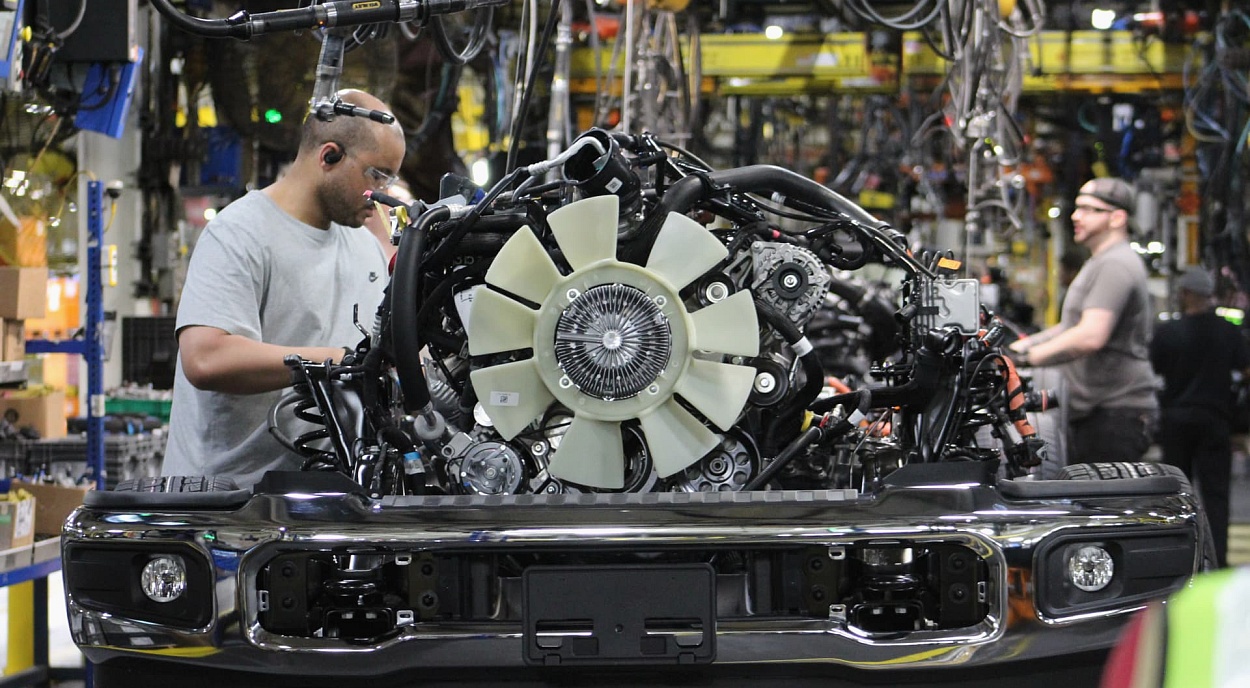
Ford Motor Company has announced a major $1 billion investment to construct a new paint shop at its Kentucky Truck Plant in Louisville, Kentucky, reinforcing the automaker’s commitment to expanding and modernizing its U.S. manufacturing operations.
The investment represents one of the latest major upgrades at a facility that plays a critical role in Ford’s global manufacturing network. The Kentucky Truck Plant is particularly important to the company because it produces some of Ford’s most recognizable and profitable vehicles, including the F-250, F-350, F-450, and F-550 Super Duty pickup trucks, as well as the Ford Expedition and Lincoln Navigator SUVs.
A Major Upgrade for a Critical Ford Facility
According to Ford, the new paint shop will replace the plant’s existing facility and introduce more modern manufacturing capabilities. Construction is expected to begin later this year, although the company has not yet announced a specific completion date.
Paint shops are among the most technically complex and expensive areas of an automotive manufacturing plant. The process involves multiple stages, including surface preparation, corrosion protection, primer application, paint application, and final finishing. Modern facilities are designed to improve efficiency, quality, environmental performance, and production flexibility.
By investing approximately $1 billion in a completely new paint shop, Ford is signaling that the Kentucky Truck Plant will remain an important part of its long-term manufacturing strategy.
The facility has become especially significant because of the strong demand for Ford’s Super Duty truck lineup. These vehicles serve a wide range of customers, from individual truck owners to construction companies, contractors, agricultural businesses, and commercial fleets.
The Expedition and Lincoln Navigator also contribute to the plant’s importance, giving Ford the ability to manufacture both heavy-duty pickups and large SUVs at the same location.
Investment Comes Amid Political Scrutiny
Ford’s announcement comes at an interesting moment for the company, as its manufacturing strategy and relationships with suppliers have recently attracted attention from the Trump administration.
Transportation Secretary Sean Duffy has raised concerns about Ford’s manufacturing operations in the United States and the company’s connections with Chinese companies. Officials within the administration have suggested that certain relationships with Chinese businesses could create potential risks for Ford and, more broadly, for the American automotive industry.
The issue reflects a wider debate taking place across the U.S. manufacturing sector. Washington has increasingly focused on reducing dependence on China for critical components, technologies, raw materials, and industrial supply chains.
Automakers are particularly affected by this discussion because modern vehicles depend on complex global supply networks. Components used in everything from batteries and electronics to manufacturing equipment can involve companies operating across multiple countries.
Against this backdrop, Ford’s decision to commit another $1 billion to a major American manufacturing facility carries additional significance.
Ford Pushes Back Against Criticism
Ford has disputed the concerns raised by federal officials, characterizing some of the criticism as an attempt to generate media attention rather than an accurate reflection of the company’s manufacturing activities.
The automaker has repeatedly emphasized its role as a major American vehicle producer and its long-standing investment in U.S. factories and workers.
The company’s response to Secretary Duffy followed a letter from the Transportation Secretary to Ford CEO Jim Farley. The exchange highlighted the growing scrutiny surrounding the automotive industry and the importance of domestic manufacturing.
Ford’s position is that continued investment in American factories is essential to maintaining a competitive automotive industry in the United States. The Kentucky Truck Plant investment provides a concrete example of that strategy.
Billions Already Invested in Kentucky
The $1 billion paint shop project is not an isolated investment. Ford has invested approximately $4 billion in Kentucky facilities over recent years, demonstrating the importance of the state to the company’s manufacturing operations.
Kentucky has become a major production hub for Ford, employing thousands of workers and supporting a broader network of suppliers and businesses connected to the automotive industry.
The Kentucky Truck Plant, in particular, has a long history of producing large Ford vehicles. Maintaining and upgrading the facility allows the company to improve its manufacturing capabilities while continuing to rely on an established workforce.
For Kentucky communities, large automotive investments can have an impact far beyond the factory itself. Manufacturing jobs support local businesses, suppliers, transportation companies, contractors, and other service providers.
The new paint shop is therefore expected to reinforce the plant’s position as an important economic engine for the region.
Why the Paint Shop Matters
At first glance, replacing a paint shop might seem less significant than building an entirely new vehicle assembly plant. However, paint operations are a critical part of automotive production and require sophisticated infrastructure.
The paint process directly affects a vehicle’s appearance, durability, corrosion resistance, and overall quality. Any disruption or inefficiency in the paint operation can affect the entire manufacturing process.
A modern paint shop can also provide manufacturers with greater flexibility in production. Improved technology can allow facilities to handle different vehicle configurations and paint requirements while maintaining consistent quality.
For Ford, upgrading the paint operation at Kentucky Truck Plant could help the company maintain production efficiency as demand for its large trucks and SUVs continues to evolve.
The investment also demonstrates that Ford intends to keep the facility competitive for years to come rather than simply maintaining its existing infrastructure.
Jim Farley Emphasizes American Manufacturing
Ford CEO Jim Farley has consistently highlighted the importance of American manufacturing and the role it could play in the future of transportation and energy.
The Kentucky investment fits into that broader vision. Rather than shifting production entirely toward new facilities or overseas operations, Ford is putting significant capital into an established American manufacturing site.
Farley has argued that future innovations in mobility and energy will depend heavily on manufacturing capabilities. That means the ability to produce vehicles, components, and technologies domestically could become increasingly important as competition between the United States and China intensifies.
The Kentucky Truck Plant investment is therefore not simply about replacing an aging paint shop. It is also part of a broader effort to ensure that Ford’s existing U.S. manufacturing infrastructure remains capable of supporting future vehicle production.
White House Response Adds Political Dimension
The dispute between Ford and federal officials also attracted attention from the White House.
Following the exchange involving Secretary Duffy and Ford CEO Jim Farley, the White House’s Rapid Response account issued a supportive statement describing Ford as a “GREAT American company.”
The response illustrates how automotive manufacturing has become closely connected to broader political discussions about American jobs, industrial competitiveness, and economic security.
For automakers, balancing global supply chains with increasing pressure to manufacture domestically is becoming a significant strategic challenge.
Ford’s latest investment suggests the company intends to maintain a substantial manufacturing presence in the United States while continuing to navigate those challenges.
A Long-Term Commitment to Kentucky
The new $1 billion paint shop represents a significant commitment to the future of the Kentucky Truck Plant.
With the facility producing the highly important Super Duty lineup alongside the Expedition and Lincoln Navigator, maintaining modern manufacturing infrastructure will be essential to Ford’s ability to remain competitive.
The project also reinforces Kentucky’s position as a major center for American automotive manufacturing.
As construction gets underway later this year, attention will likely turn toward how the new paint shop affects production efficiency, vehicle quality, and the long-term future of the facility.
For Ford, however, the message behind the investment is clear: despite growing political scrutiny surrounding global supply chains and manufacturing relationships, the company continues to place significant capital into American factories.
The $1 billion project, combined with roughly $4 billion in previous investments across Kentucky, represents a substantial financial commitment to the state, its workforce, and Ford’s broader U.S. manufacturing strategy.
As the automotive industry enters a period of rapid technological and geopolitical change, investments like this could become increasingly important. For Ford, keeping major facilities such as the Kentucky Truck Plant modern and competitive may be essential to maintaining its position as one of America’s leading vehicle manufacturers.