
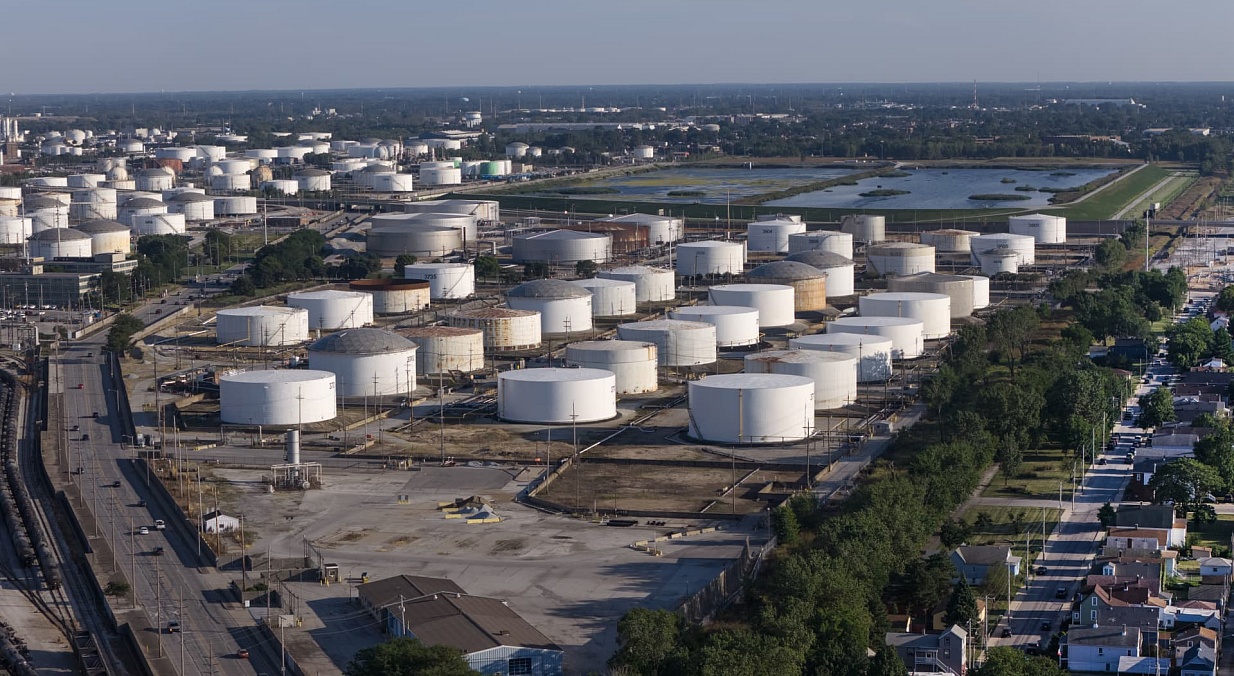
Family offices and ultra-high-net-worth investors are increasing their interest in mineral rights, producing oil and gas fields and energy infrastructure as geopolitical tensions and rising power demand reshape the global energy investment landscape.
The renewed attention comes as the conflict involving Iran adds uncertainty to global energy markets while the rapid expansion of artificial intelligence is creating expectations for substantial long-term growth in electricity demand.
For wealthy investors with long investment horizons, traditional energy assets can offer several attractive characteristics, including recurring cash flow, exposure to physical resources and a potential hedge against inflation.
But finding attractive deals has become increasingly difficult.
Institutional investors, private-equity firms and other sophisticated buyers have returned to the sector, increasing competition and pushing valuations higher for desirable assets.
Oil and gas transaction activity has rebounded sharply after a quieter period following the Covid pandemic. According to research from Wood Mackenzie, oil and gas deal spending during the first half of 2026 reached its highest level in two years.
Gas production assets have been particularly active, with deal spending exceeding $32 billion — a level not seen in more than a decade.
For family offices, the result is an unusual environment: energy assets have become more attractive at the same time that the best opportunities have become more difficult to acquire.
Family Offices Are Returning to Traditional Energy
Family offices manage the wealth of some of the world’s richest families and frequently have investment objectives that differ from traditional asset managers.
Unlike mutual funds or other investment vehicles that may be evaluated against short-term benchmarks, family offices can often invest with a multigenerational perspective.
That flexibility can be particularly useful in industries such as energy, where commodity cycles can last years and infrastructure projects may require long periods to develop.
Oil and gas have not always been popular institutional investments in recent years.
Environmental concerns and pressure to reduce exposure to fossil fuels led some investors to step away from the sector after the pandemic.
Family offices were among the investors able to take advantage of the resulting decline in competition.
Today, however, the situation has changed.
Energy security concerns, geopolitical instability and growing expectations for power consumption have helped attract capital back to the industry.
Oil and Gas Deal Activity Is Accelerating
Wood Mackenzie’s data illustrate the scale of the recovery.
Spending on oil and gas transactions during the first six months of 2026 reached a two-year high.
Gas assets have been a particularly important driver.
Deal spending involving gas production surpassed $32 billion during the period, reaching its highest level in more than 10 years.
The renewed activity reflects several forces.
Energy companies continue repositioning their portfolios.
Private capital is looking for cash-generating assets.
Investors are also evaluating the role natural gas could play in meeting growing electricity demand while supporting power systems that increasingly incorporate renewable energy.
At the same time, geopolitical uncertainty has reminded investors that reliable access to energy remains strategically important.
The result has been more buyers competing for a limited number of attractive assets.
A ‘Seller’s Market’ Is Making Deals More Expensive
Jeff Peterson, chief investment officer at Gillon Capital, describes the current environment as a “seller’s market.”
Peterson has managed investments for descendants of oil magnate H.L. Hunt for more than a decade, giving him extensive experience with energy-related assets.
A seller’s market creates an obvious challenge for buyers.
When multiple investors compete for the same properties, owners can demand higher prices and more favorable terms.
That can reduce expected returns.
For family offices, discipline becomes particularly important.
The objective is not simply to acquire oil and gas exposure. It is to purchase assets at valuations that can generate attractive returns without depending on unusually optimistic commodity-price assumptions.
That becomes harder when institutional buyers and private-equity firms are competing for the same opportunities.
Oil Price Volatility Complicates Valuations
Commodity volatility adds another layer of difficulty.
Brent crude has traded between approximately $70.14 and $102 per barrel since June, according to the figures provided, demonstrating how quickly energy-market expectations can change.
In one July trading session alone, Brent prices increased nearly 10%.
Moves of that magnitude can dramatically affect the economics of oil-producing assets.
When crude prices rise, projected cash flows from producing wells can increase rapidly.
When prices fall, the opposite occurs.
That makes valuation difficult for both buyers and sellers.
A seller may price an asset based on expectations that high commodity prices will persist.
A buyer may worry that those prices are temporary.
If the two sides use significantly different long-term oil assumptions, completing a transaction becomes difficult.
This is one reason experienced energy investors often try to avoid building investment strategies that require perfectly timing commodity cycles.
Iran Conflict Has Increased Attention on Energy Security
Geopolitical tensions involving Iran have added another source of uncertainty to energy markets.
The Middle East remains critically important to global oil production and transportation.
When conflicts threaten production or transportation routes, markets can quickly price in the possibility of supply disruptions.
Family offices investing in energy are not necessarily betting that geopolitical tensions will continue indefinitely.
Instead, the renewed attention illustrates the strategic importance of physical energy assets during periods of uncertainty.
Producing wells, mineral rights, pipelines and export facilities represent ownership interests in infrastructure and resources that the economy requires regardless of short-term financial-market sentiment.
That characteristic can be attractive to investors attempting to diversify portfolios heavily exposed to financial assets.
Artificial Intelligence Is Creating a New Energy Investment Story
The artificial intelligence boom is also influencing how investors think about energy.
AI requires substantial computing capacity.
That computing capacity requires data centers.
And data centers require electricity.
As technology companies invest billions of dollars in AI infrastructure, expectations for future power demand have increased.
The energy required to support AI is therefore becoming part of the investment case for natural gas and energy infrastructure.
This does not mean artificial intelligence automatically guarantees higher returns for oil and gas investors.
Electricity demand can be met through multiple sources, including natural gas, nuclear power and renewable energy.
But the scale and reliability requirements of modern data centers are encouraging investors to reconsider the value of infrastructure capable of delivering energy consistently.
For family offices, this creates an investment theme that extends beyond short-term movements in crude oil prices.
Infrastructure Is Becoming More Important
Andrew Dock, head of energy wealth management at Bank of America, says investors are increasingly taking a longer-term approach to energy.
Instead of concentrating exclusively on commodity production, some wealthy investors are looking at infrastructure such as pipelines and export facilities.
Dock characterizes this shift as structural rather than merely cyclical.
The distinction is important.
A cyclical investment strategy attempts to profit primarily from changes in commodity prices.
A structural strategy focuses on assets expected to remain economically important over longer periods.
Pipelines, processing facilities and export infrastructure can potentially generate revenue from moving or handling energy rather than depending exclusively on the price of the commodity itself.
That can provide a different risk profile from directly owning oil or gas production.
Infrastructure Opportunities Are Still Scarce
The challenge is that attractive infrastructure assets are not easy to find.
Dock points to permitting delays and construction complexity as significant obstacles.
Major energy infrastructure projects can require years of planning, regulatory approvals and construction.
Environmental reviews, local opposition, financing requirements and engineering challenges can all slow development.
That scarcity can increase the value of existing infrastructure.
An operating pipeline in an important producing region cannot necessarily be replicated quickly by a competitor.
The same can apply to export facilities and other strategically located assets.
For investors, scarcity can create value.
But it can also make acquisitions more expensive.
Once again, the central problem is not finding reasons to like energy infrastructure. It is finding attractive assets at prices that still offer reasonable expected returns.
Smaller Deals Could Offer Family Offices an Advantage
One area where family offices may have an advantage is smaller transactions.
Cody Carper, a partner at Baker Botts and co-chair of the firm’s oil and gas practice, says opportunities may remain in deals valued below $100 million.
These transactions can fall outside the primary focus of larger institutional buyers.
A large private-equity fund deploying billions of dollars may not want to spend significant time and resources evaluating relatively small assets.
For a family office, however, a transaction worth tens of millions of dollars can be meaningful.
This creates a potential niche.
Family offices can target properties that are too small for the largest buyers but still large enough to generate attractive cash flow.
Less competition does not automatically make these investments good deals, but it can improve the opportunity set.
Mineral Rights Offer a Different Form of Energy Exposure
Mineral rights can provide another route into the energy sector.
Owning mineral rights can allow investors to receive economic benefits from resources extracted from a property without necessarily operating the wells themselves.
Depending on the structure, owners may receive royalties tied to production.
This can make mineral rights attractive to investors seeking exposure to oil and gas while avoiding some of the operational responsibilities associated with running drilling operations.
However, the value of mineral rights can vary dramatically.
Location matters.
Production quality matters.
The financial strength and operational skill of the producer matter.
Commodity prices matter.
Contract terms can also have substantial effects on returns.
For family offices considering mineral rights, detailed technical and legal due diligence is therefore essential.
Mature Producing Fields Can Provide More Predictable Cash Flow
Peter Suberlak, director of investments at Tolleson Wealth Management, says clients are particularly interested in quality assets capable of producing steady cash flow.
That often means mature fields with wells already producing oil or gas.
The strategy differs from investing heavily in exploration.
An undeveloped property may offer significant upside if drilling is successful, but it also involves greater uncertainty.
Producing fields provide actual operating data.
Investors can examine production history, costs and existing cash flows.
Experienced operators may also be able to improve the economics of mature assets.
Better drilling techniques, cost reductions and more efficient production management can potentially increase output or extend the productive life of wells.
For family offices, this creates an opportunity to generate value through operational improvement rather than relying entirely on higher commodity prices.
Cash Flow Matters More Than Predicting Oil Prices
Suberlak’s approach reflects a broader principle emerging among wealthy energy investors.
The goal is not necessarily to predict whether oil will be $80, $100 or $120 per barrel several months from now.
Instead, investors can look for assets capable of generating acceptable returns across a range of commodity-price scenarios.
This approach places greater emphasis on production costs, asset quality and operating efficiency.
A field that requires extremely high oil prices to generate attractive returns may be vulnerable during a downturn.
A lower-cost asset with reliable production can be more resilient.
That distinction becomes particularly valuable during periods of commodity volatility.
Investors cannot control global oil prices.
They can control the quality and price of the assets they purchase.
Longer Investment Horizons Can Be a Competitive Advantage
Family offices can also benefit from patience.
Traditional investment funds may have predetermined timelines for buying, improving and selling assets.
Family offices often face fewer constraints.
They can hold an investment for many years if the asset continues generating attractive cash flow.
That allows them to wait through periods of weak commodity pricing instead of being forced to sell at an unfavorable moment.
A longer horizon can also give operators more time to improve production and reduce expenses.
In an industry known for dramatic cycles, the ability to avoid forced transactions can become a meaningful competitive advantage.
Energy Is Becoming a Long-Term Portfolio Question
The renewed interest in oil, gas and mineral rights demonstrates how the energy investment debate is changing.
For several years, much of the discussion focused on reducing fossil-fuel exposure and accelerating the transition toward cleaner energy.
Those trends have not disappeared.
But investors are simultaneously confronting rising electricity demand, geopolitical instability and the practical challenge of maintaining reliable energy supplies.
Artificial intelligence has added another dimension by increasing expectations for data-center power consumption.
As a result, traditional energy assets are again receiving serious attention from sophisticated investors.
The opportunity, however, comes with substantial challenges.
Competition has increased.
Valuations have risen.
Oil prices remain volatile.
Infrastructure is scarce and difficult to build.
Family offices therefore need to be selective.
Smaller transactions below $100 million, mature producing fields, mineral rights and strategic infrastructure may provide opportunities that fit their longer investment horizons.
The strongest strategy may ultimately be the least dependent on predicting the next move in oil prices.
For wealthy investors seeking long-term exposure to energy, the focus is increasingly on high-quality assets capable of generating sustainable cash flow through multiple commodity cycles.
In a market shaped simultaneously by geopolitical risk, artificial intelligence and renewed competition for physical energy assets, patience and disciplined valuation may prove more valuable than simply betting on higher oil prices.