
Oil prices climbed above $102 per barrel on Thursday, reaching their highest closing level since May as escalating conflict in the Middle East, tightening global inventories and disruptions to Saudi Arabia’s critical East-West pipeline intensified concerns about the availability of crude supplies.
The latest rally represents a dramatic reversal from the summer low of $68.55 per barrel.
Oil has gained nearly 50% from that level, which was recorded shortly after a memorandum of understanding between the United States and Iran fell apart on June 17.
Despite the surge, prices remain below the wartime peak of $112.95 reached in April.
The distance between those levels illustrates just how volatile the global oil market has become.
Geopolitical events remain the most visible driver, but another factor could play an increasingly important role in determining whether crude prices continue rising or begin to stabilize: China.
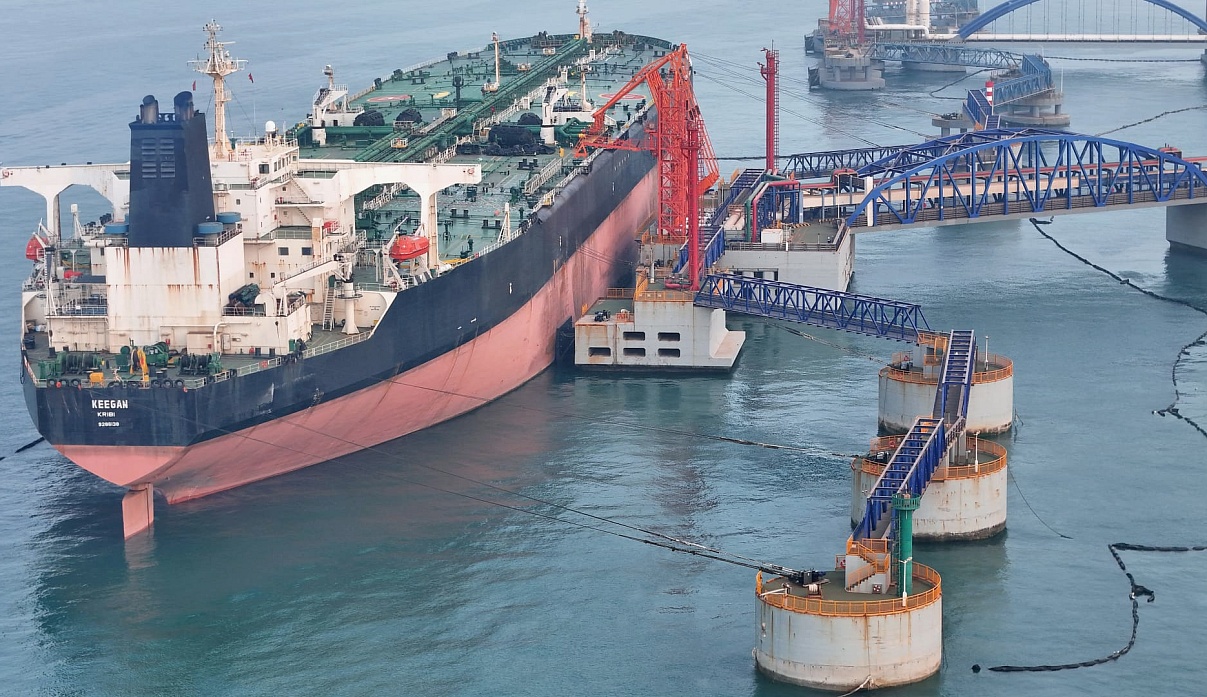
As the world’s largest crude importer, China’s purchasing decisions can significantly influence the balance between global oil supply and demand.
During the height of recent geopolitical tensions, China dramatically reduced crude imports and relied more heavily on its enormous petroleum inventories.
Now those purchases are beginning to recover.
The question facing energy markets is whether Chinese refiners will continue increasing imports — potentially adding further pressure to an already tight global market — or remain cautious enough to avoid driving prices substantially higher.
Oil Returns Above $102
The move above $102 marks the highest close for U.S. crude since May and extends one of the most significant oil rallies of 2026.
The increase from $68.55 represents a gain of almost 50%.
Such a large move in a relatively short period can have consequences throughout the global economy.
Higher crude prices eventually influence gasoline, diesel, jet fuel and other petroleum products.
Transportation costs can increase.
Manufacturers can face higher expenses.
Airlines may pay more for fuel.
Consumers can experience higher prices at gasoline stations.
For central banks already dealing with persistent inflation, another major increase in energy costs creates an additional complication.
That helps explain why developments in the oil market are being watched far beyond the energy industry.
Saudi Pipeline Disruption Adds Supply Concerns
The latest price increase has coincided with disruptions involving Saudi Arabia’s East-West oil pipeline.
The pipeline is strategically important because it allows Saudi crude to move across the country toward the Red Sea.
Infrastructure that provides alternative transportation routes becomes particularly valuable during periods of regional conflict.
Any disruption affecting major oil transportation systems can create concerns about how easily producers can move crude to international buyers.
Markets often react not only to barrels that have already disappeared from supply but also to the possibility of future disruptions.
When geopolitical risk increases, traders may assign a larger premium to crude because the consequences of additional infrastructure problems could become more severe.
Prices Remain Below the April Peak
Despite the renewed rally, crude has not returned to its April wartime high of $112.95.
That distinction matters.
The current market is clearly tight and volatile, but it has not yet recreated the extreme pricing conditions seen earlier in the conflict.
China may be one reason.
The country has used its enormous inventories and flexible purchasing strategy to adjust how much crude it needs from international markets.
That behavior has effectively allowed China to act as a swing consumer.
When global prices become extremely expensive, China can reduce purchases and draw from storage.
When market conditions become more attractive or refining economics improve, it can return to the international market.
This flexibility has become increasingly important during the current crisis.
China’s Crude Imports Fell Dramatically
China imported approximately 11.5 million barrels of crude per day in February.
By June, that figure had fallen to roughly 6 million barrels per day.
That represents a decline of nearly half.
The timing was significant because the reduction occurred during an extremely volatile period for global energy markets.
Had China continued buying crude at its earlier pace while other countries were competing for disrupted supplies, prices could have faced even greater upward pressure.
Instead, the country relied more heavily on existing petroleum reserves.
China has accumulated more than 1 billion barrels of petroleum reserves, according to the information provided.
Those inventories gave Beijing substantial flexibility during the crisis.
Chinese Imports Are Beginning to Recover
The pattern has started changing.
Chinese crude purchases recovered to approximately 7 million barrels per day in July and August.
That remains significantly below the 11.5 million barrels per day imported in February.
But even a partial recovery matters in a global market where available inventories have been declining.
An additional million barrels per day of demand represents roughly 30 million barrels over a month.
When inventories are abundant, the market may absorb that demand relatively easily.
When supply buffers are shrinking, incremental demand can have a much larger impact.
This is why traders are paying close attention to Chinese import data.
China Has Become a Critical Swing Consumer
The concept of a swing producer is familiar in energy markets.
A major oil-producing country can increase or decrease production to influence global supply.
China is demonstrating something similar from the demand side.
Its enormous import requirements, domestic inventories and refining system give the country flexibility to change how aggressively it purchases crude.
When prices rise sharply, China can reduce imports and use stored petroleum.
When prices fall or refining margins become attractive, Chinese companies can increase purchases.
That creates a stabilizing force under some conditions.
But it can also intensify market pressure when China returns as a large buyer precisely as global supplies are already tight.
Diesel Economics Are Encouraging Refiners to Buy
One reason Chinese crude demand is recovering involves refining margins.
The profitability of producing diesel has increased significantly.
Conflicts involving Iran and Ukraine have reduced global refining capacity, according to the information provided, tightening supplies of refined petroleum products.
That creates an opportunity for refiners still capable of operating efficiently.
A refinery does not simply buy crude because oil is available.
It buys crude when processing that oil into products such as diesel, gasoline and jet fuel can generate attractive returns.
When the price of refined products rises faster than the cost of crude, refining margins improve.
Those stronger margins encourage refiners to process more oil.
In China, that economic incentive is now contributing to higher crude purchases.
China Is Expected to Remain a Cautious Buyer
Analysts do not necessarily expect China to suddenly return to maximum purchasing levels.
Beijing has strong reasons to remain disciplined.
Aggressive buying could push global crude prices even higher.
That would increase the cost of China’s own future imports.
Instead, analysts describe the country as a “savvy buyer.”
Chinese refiners can balance several options.
They can import more crude.
They can use existing inventories.
They can adjust refinery operating rates.
That flexibility allows China to participate in the market without necessarily creating an abrupt demand shock.
The most likely path may therefore involve gradual purchasing rather than a dramatic surge.
China Has an Incentive Not to Chase Oil Higher
China’s position creates an unusual economic calculation.
Its refiners benefit from strong diesel margins.
But purchasing too much crude too quickly could contribute to higher oil prices and reduce those margins.
China therefore has an incentive to increase purchases carefully.
If traders see Chinese demand accelerating aggressively while global supplies remain constrained, crude could move higher.
If China waits for temporary price declines before purchasing, it may obtain better economics while reducing its impact on the broader market.
This makes Chinese buying behavior particularly important around the $100-per-barrel level.
Global Inventories Have Fallen by 400 Million Barrels
China’s decisions are becoming more important because the global inventory cushion has deteriorated substantially.
Worldwide petroleum inventories have declined by approximately 400 million barrels since the conflict began more than six months ago, according to figures cited from the U.S. Energy Information Administration.
That is a major reduction.
Inventories serve as a buffer between temporary supply disruptions and actual shortages.
When storage levels are high, the market can compensate for lost production or transportation problems by drawing from existing stocks.
As inventories decline, that protection becomes weaker.
The same supply disruption can therefore have a larger impact on prices when global stocks are low.
The Market Has Lost an Important Safety Cushion
The decline of approximately 400 million barrels changes the psychology of the market.
Earlier in a conflict, traders may believe governments and commercial companies have enough stored oil to manage temporary disruptions.
After months of inventory withdrawals, confidence in that buffer can weaken.
Markets become more sensitive to bad news.
A pipeline disruption that might previously have produced a modest price move can suddenly trigger a larger rally.
The reason is not necessarily that the immediate physical loss is enormous.
It is that the market has fewer alternatives available if the problem becomes worse.
This creates what traders often describe as a tighter balance.
Emergency Stockpile Releases Are Losing Effectiveness
Government emergency reserves have also played an important role in limiting price increases during the conflict.
Releasing strategic petroleum stocks can temporarily increase available supply and calm markets.
But emergency reserves are finite.
As releases continue, governments have fewer barrels available for future intervention.
According to the information provided, emergency stockpile releases are approaching exhaustion.
That does not necessarily mean strategic reserves have literally reached zero.
Rather, the amount of additional supply policymakers can realistically release without creating other strategic concerns is becoming more limited.
If the conflict continues and commercial inventories keep falling, markets may increasingly question how much governments can still do to suppress prices.
Diplomatic Rhetoric Is Having Less Influence
Earlier in the crisis, statements suggesting diplomatic progress could move oil prices substantially.
Traders reacted to the possibility that negotiations might reduce supply risks.
That optimism appears to have weakened.
Industry observers note that diplomatic rhetoric is having less influence on crude prices than it did previously.
Markets increasingly want concrete evidence that supply conditions will improve.
This shift matters because expectations are an important component of commodity pricing.
If traders believe a conflict will soon end, they may be less willing to pay a large geopolitical premium for oil.
If repeated diplomatic efforts fail, markets can become skeptical.
That appears to be happening now.
Higher Oil Prices Could Reinforce Inflation
The return of crude above $102 has implications for inflation.
Energy is already contributing significantly to U.S. consumer price increases.
Higher crude prices can eventually translate into higher gasoline and diesel costs.
Diesel is particularly important because it affects commercial transportation.
Trucks move enormous quantities of food and consumer products.
Higher fuel expenses can increase shipping costs throughout supply chains.
Companies may absorb some of those costs, but others can be passed to consumers.
That creates a potential second-round inflation effect.
Oil therefore matters directly to the Federal Reserve even though monetary policy cannot resolve geopolitical supply disruptions.
Central Banks Cannot Produce More Oil
Higher interest rates can reduce demand throughout an economy, but they cannot repair a damaged pipeline or increase oil production directly.
This creates a difficult policy problem.
If energy prices rise because of supply disruptions, central banks need to determine whether the increase will remain concentrated in energy or spread to other goods and services.
If higher oil prices begin affecting inflation expectations and broader pricing behavior, policymakers may become more concerned.
If the shock proves temporary, aggressive monetary tightening could unnecessarily weaken economic growth.
The longer oil remains above $100, however, the more difficult it becomes for policymakers to dismiss energy inflation as a short-lived event.
What China Does Next Could Determine Oil’s Direction
The next phase of the oil market may depend heavily on China’s behavior.
If Chinese crude imports continue climbing while global inventories fall, supply conditions could tighten further.
If Beijing instead relies more heavily on its massive petroleum reserves and keeps purchases controlled, it could help limit additional price increases.
The country has reasons to pursue both strategies.
Strong diesel refining margins encourage higher crude purchases.
But high global oil prices encourage restraint.
That tension makes Chinese import and refinery data especially important for traders.
Oil Markets Enter a More Fragile Phase
Crude’s return above $102 per barrel represents more than another milestone in a volatile year.
The market’s underlying structure is becoming increasingly fragile.
Oil has risen nearly 50% from its summer low of $68.55.
Saudi Arabia’s East-West pipeline has faced disruption.
Global petroleum inventories have fallen by approximately 400 million barrels since the conflict began.
Emergency stockpile releases are becoming less effective as an additional source of supply.
Meanwhile, Chinese refiners are gradually returning to the international crude market as strong diesel margins make additional production more profitable.
China has not returned to its pre-conflict import level of 11.5 million barrels per day. Purchases of roughly 7 million barrels per day in July and August remain relatively restrained.
But in a tight market, even a gradual increase can matter.
That places Beijing in an unusually influential position.
China can use its more than 1 billion barrels of petroleum reserves to reduce purchases when prices become excessive, effectively helping to moderate global demand.
Or it can increase imports when refining economics justify doing so, adding pressure to already constrained supplies.
For now, analysts expect China to remain cautious rather than chase crude aggressively above $100.
But as of September 12, 2026, the margin for error in global oil markets is becoming smaller.
With inventories depleted, geopolitical tensions unresolved and major energy infrastructure facing disruption, China’s next moves may help determine whether oil stabilizes near current levels — or begins another attempt to challenge the $112.95 wartime peak.