
General Motors is developing a new generation of battery cells designed to reduce America’s dependence on Chinese materials while increasing the amount of technology and raw materials sourced domestically.
The strategy represents a significant shift in how one of America’s largest automakers is approaching the increasingly important global battery industry.
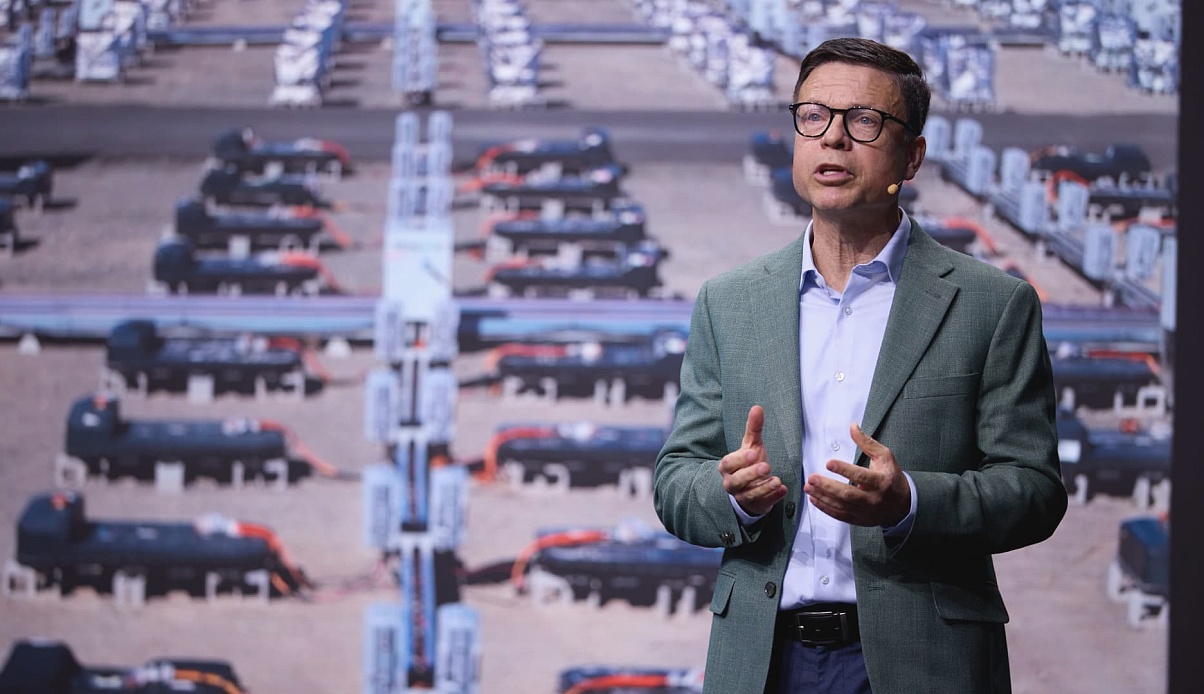
Kurt Kelty, GM’s vice president of battery and sustainability, said the company expects it could establish a substantially more domestic battery supply chain within the next two to three years, particularly for cells used in energy storage systems.
Those systems, commonly known as ESS, can store electricity for homes, businesses and increasingly power-hungry infrastructure such as data centers.
GM also intends to prioritize domestic battery production for future electric vehicles.
A central component of that strategy is an emerging technology: sodium-ion batteries.
GM is working with Denver-based startup Peak Energy to develop sodium-ion cells that could eventually provide an alternative to battery chemistries whose supply chains remain heavily concentrated in China.
Rather than simply reproducing existing Chinese battery manufacturing in the United States, Kelty says GM wants to develop technology capable of surpassing today’s dominant solutions.
The goal, he said, is to “leapfrog” existing battery technologies by building new systems around materials that can be sourced more easily in the United States.
GM Turns to Sodium-Ion Technology
Most of today’s electric vehicles rely heavily on lithium-based batteries.
GM’s partnership with Peak Energy explores a different approach.
Sodium-ion batteries replace some of the materials traditionally associated with lithium-based cells with alternatives centered around sodium.
One potential source is soda ash, which is abundant in the United States.
That domestic availability could become strategically important.
Battery manufacturing is not simply about building factories.
A country also needs reliable access to the raw materials and processed components that go inside battery cells.
If U.S. companies build battery factories but continue depending heavily on China for critical inputs, the supply chain remains vulnerable to geopolitical tensions, trade restrictions and disruptions.
Sodium-ion technology could potentially change that equation by relying on materials available closer to home.
Commercial Production Is Targeted Around 2029
GM expects commercial production of sodium-ion batteries developed with Peak Energy to begin around 2029.
That timeline demonstrates that the transition will not happen immediately.
Developing a new battery chemistry requires more than proving that it works in a laboratory.
Companies need to determine whether cells can be manufactured reliably at large scale.
They need to evaluate safety, longevity, energy density, charging performance and cost.
Manufacturing equipment needs to be designed and tested.
Suppliers need to be established.
Customers need confidence that batteries will perform consistently for years.
For an automaker such as GM, reliability is especially important because batteries can represent one of the most expensive components of an electric vehicle.
For stationary energy storage, batteries may also need to operate through thousands of cycles over long periods.
The 2029 target therefore reflects a multi-year industrial development effort rather than a simple product launch.
China Currently Dominates the Battery Industry
GM’s strategy needs to be understood within the extraordinary concentration of battery manufacturing in China.
According to the International Energy Agency, China produces approximately 85% of the world’s cathode active material.
Its share of anode active material production exceeds 90%.
China also controls roughly 80% of global battery manufacturing.
Those numbers illustrate the scale of the challenge facing American manufacturers.
China’s advantage was built over years through investment in mining, material processing, manufacturing capacity, supply-chain infrastructure and battery technology.
As a result, companies outside China may still depend on Chinese suppliers even when final battery assembly occurs elsewhere.
For the United States, reducing that dependence therefore requires developing an entire industrial ecosystem.
Battery Chemistry Is Not One-Size-Fits-All
There is no single battery chemistry that is ideal for every application.
Electric vehicles have different requirements from stationary storage systems.
A passenger EV may prioritize energy density because manufacturers want to maximize driving range without adding excessive weight.
A battery installed beside a data center does not need to move.
Weight and physical size may therefore be less important than cost, safety, lifespan and temperature tolerance.
Home energy storage systems can have another set of requirements.
This allows manufacturers to develop different chemistries for different markets.
GM’s sodium-ion effort appears particularly relevant to stationary energy storage, where some of sodium-ion’s potential disadvantages compared with lithium-based batteries may matter less.
Energy Storage Is Becoming Strategically Important
The energy storage market is expanding beyond electric vehicles.
Homes can use batteries to store electricity generated by rooftop solar systems or provide backup power.
Businesses can use storage to manage energy demand and electricity costs.
Utilities can use large battery installations to help balance power grids.
Data centers represent another major opportunity.
The rapid expansion of artificial intelligence has increased attention on electricity demand from computing infrastructure.
AI systems require enormous amounts of computing power, and the data centers supporting those systems need reliable energy supplies.
Battery storage can potentially help manage fluctuations in demand and provide greater resilience.
That makes battery technology increasingly important to sectors far beyond transportation.
Sodium-Ion Could Offer Advantages for Stationary Storage
Kelty has highlighted several characteristics that could make sodium-ion batteries attractive for energy storage.
One important advantage involves temperature tolerance.
Battery systems can require cooling equipment to maintain safe and efficient operating temperatures.
Cooling adds cost.
It also adds mechanical complexity and consumes energy.
If sodium-ion cells can operate effectively without active cooling in applications where competing technologies require it, the overall storage system could become simpler and cheaper.
That matters because customers ultimately care about total ownership cost rather than only the price of an individual battery cell.
A slightly different battery chemistry can become economically attractive if it reduces cooling requirements, maintenance costs or other supporting infrastructure.
GM Wants Sodium-Ion to Challenge LFP Batteries
Lithium iron phosphate batteries, commonly known as LFP, have become increasingly important in both electric vehicles and stationary energy storage.
LFP batteries offer several attractive characteristics, including relatively low cost and stability.
But their supply chain remains strongly influenced by China.
GM currently produces LFP batteries in the United States with LG Energy Solution for energy storage applications.
Ford also uses LFP technology, including technology licensed from Chinese battery giant CATL, for its EV and energy storage operations.
Kelty believes sodium-ion could eventually offer a better solution for some applications.
Instead of merely expanding domestic production of an established Chinese-dominated technology, GM wants to create a new supply chain around technology and resources developed in the United States.
GM’s Strategy Differs From Ford’s Approach
The difference between GM and Ford illustrates two possible strategies for reducing battery costs and expanding domestic production.
Ford has used LFP technology licensed from CATL.
That approach can provide access to established battery technology while allowing production to occur in the United States.
GM is placing greater emphasis on developing alternative technology that it believes could eventually be sourced more completely within the country.
The distinction has attracted political attention.
The Trump administration has made strengthening domestic battery supply chains a priority.
Transportation Secretary Sean Duffy has raised concerns about Ford’s relationships with Chinese companies, including the CATL licensing arrangement.
Ford remains the leading vehicle producer in the United States, but its use of Chinese battery technology has become part of a larger debate over how much technological dependence should remain acceptable even when manufacturing occurs domestically.
Building a Truly Domestic Supply Chain Will Take Years
Industry analyst Sam Abuelsamid has cautioned that establishing a domestic battery supply chain will require time.
A battery factory alone is not enough.
Manufacturers need cathode and anode materials.
They need chemical processing.
They need equipment.
They need specialized engineering expertise.
They need suppliers capable of delivering materials at automotive scale and quality.
Even if a particular mineral exists in the United States, companies still need infrastructure capable of processing it economically.
Abuelsamid noted that LFP materials could also potentially be produced domestically.
However, sodium-ion batteries may offer advantages related to cost and manufacturing.
The competitive question is therefore not simply which chemistry works best technically.
It is which technology can be produced reliably and economically at enormous scale.
China Is Not Standing Still
Another challenge for GM is that Chinese battery companies are continuing to innovate.
China is also advancing sodium-ion technology and other emerging battery chemistries.
That means American companies are competing against a moving target.
If GM spends years developing a technology that only matches what Chinese manufacturers already produce, the strategic advantage may be limited.
This helps explain Kelty’s emphasis on leapfrogging existing technology.
GM’s objective is not simply to recreate today’s Chinese battery ecosystem inside the United States.
The company wants to develop technologies that could provide better economics or performance while relying on domestic resources.
Whether that can be achieved commercially remains to be demonstrated.
GM Is Investing $900 Million in Battery Research
The automaker is backing its battery ambitions with substantial investment.
GM is investing approximately $900 million in new battery laboratory facilities at its global technology campus near Detroit.
The expansion includes a prototyping manufacturing facility covering more than 500,000 square feet.
The facility is scheduled to open later this year.
Prototype manufacturing is an important bridge between laboratory research and commercial production.
Scientists may successfully produce a small number of experimental cells.
Manufacturing millions of cells consistently is a different challenge.
A prototyping facility allows engineers to test manufacturing processes, materials and cell designs at greater scale before committing billions of dollars to full production plants.
$900 Million Is Still Small Compared With China’s Scale
Kelty has acknowledged that GM’s investment, while substantial for an individual company, remains limited compared with the amount of capital required to significantly reduce China’s dominance.
China’s battery industry is the result of an enormous industrial ecosystem developed over many years.
Closing that gap will require investment not only from automakers but also from mining companies, chemical processors, equipment manufacturers, battery suppliers, technology startups and governments.
The United States will also need skilled workers and engineers.
This is why Kelty describes the effort as building an industry rather than simply introducing a new battery.
Batteries Are Becoming Critical Infrastructure
The strategic importance of batteries extends far beyond electric cars.
Modern economies increasingly depend on electricity.
Renewable energy can require storage to balance differences between when power is generated and when consumers need it.
Data centers need reliable power.
Homes and businesses want backup systems.
Electric vehicles require enormous battery production capacity.
Industrial equipment is becoming increasingly electrified.
This means batteries are gradually becoming a form of critical economic infrastructure.
A country that depends heavily on foreign suppliers for battery materials and technology may face vulnerabilities similar to those associated with dependence on foreign energy supplies or semiconductor manufacturing.
That is why battery supply chains have become an economic and national policy issue.
GM Is Betting on Innovation Instead of Replication
GM’s sodium-ion strategy ultimately represents a broader philosophy about competing with China’s manufacturing advantage.
The company could focus primarily on reproducing existing battery technologies domestically.
Instead, Kelty argues that American manufacturers should attempt to develop superior technologies around materials available within the United States.
Sodium-ion batteries provide one possible route.
Their potential advantages in material availability, temperature tolerance and stationary storage economics could make them particularly attractive for energy storage systems.
But significant challenges remain.
Commercial production is still years away.
Manufacturing needs to scale.
Performance must be proven.
Domestic suppliers need to emerge.
And Chinese companies are developing competing technologies at the same time.
The Battery Race Is About More Than Electric Vehicles
GM’s investment reflects how the global battery competition is expanding into a much larger economic contest.
Electric vehicles remain important, but they are only one part of the opportunity.
Energy storage for homes, businesses, utilities and data centers could create enormous additional demand.
For the United States, the challenge is that much of today’s battery supply chain remains concentrated in China.
The International Energy Agency estimates that China controls approximately 80% of global battery manufacturing, around 85% of cathode active material production and more than 90% of anode active material production.
GM believes developing sodium-ion batteries around domestically available resources could help change that balance.
The company is working with Peak Energy toward commercial production around 2029 while investing $900 million in research and prototype manufacturing near Detroit.
Success would not eliminate U.S. dependence on China overnight.
Kelty himself acknowledges that rebuilding a domestic battery industry will take years and require investments far beyond GM’s current commitments.
But the company’s strategy signals a potentially important shift.
Rather than asking how American manufacturers can reproduce China’s existing battery supply chain, GM is asking whether they can build a different one.
If sodium-ion technology delivers on its potential, the answer could have consequences far beyond General Motors — influencing electric vehicles, data centers, grid storage and America’s broader effort to establish greater control over one of the most strategically important technologies of the coming decades.