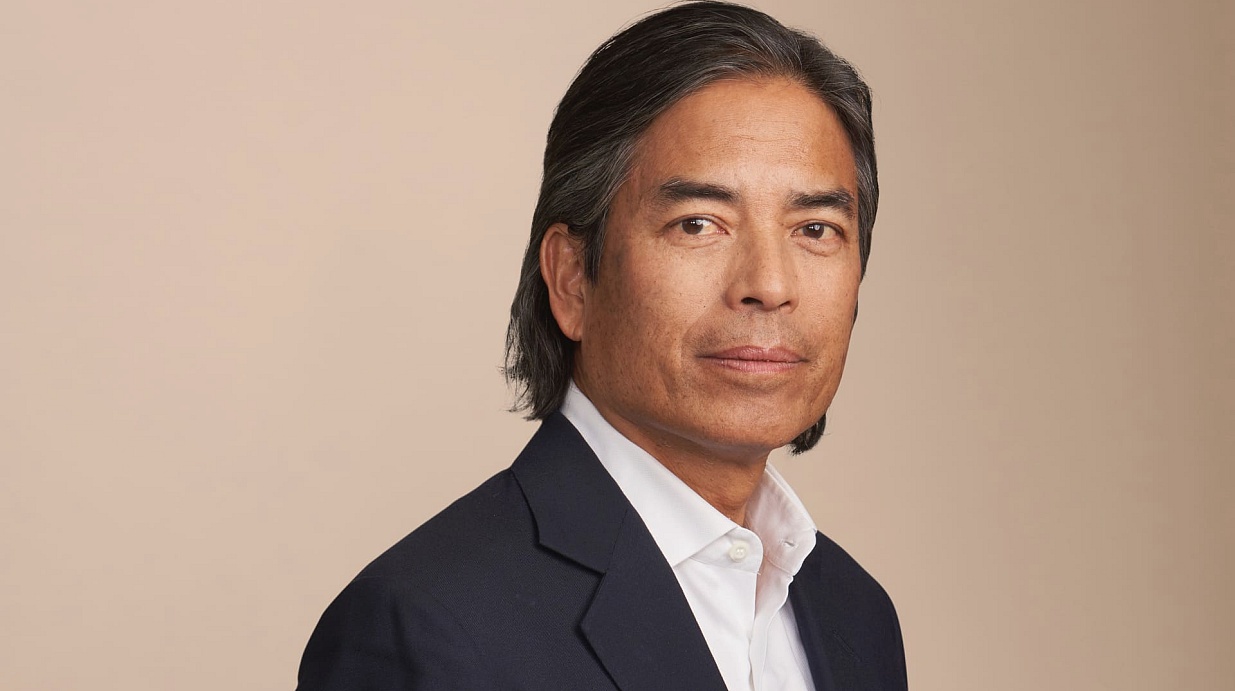
Twenty-five years after the September 11 attacks, Daniel Chung’s career remains inseparable from a decision that kept him away from the World Trade Center on one of the darkest days in American history.
Chung, now CEO and chief investment officer of Fred Alger Management, was attending a meeting in Midtown Manhattan on the morning of September 11, 2001. Instead of being at Alger’s headquarters on the 93rd floor of One World Trade Center, he was investigating the performance of an important stockholding.
That meeting may have saved his life.
When the first hijacked plane struck the North Tower, where Alger’s offices were located, Chung and the others attending the Midtown meeting initially did not understand the scale of what had happened.
A note was delivered informing the CEO about an incident at the World Trade Center. Like many Americans during those first confusing minutes, the people in the room initially believed an aircraft accident may have occurred.
Then the second plane struck the South Tower.
It became clear that the United States was under attack.
For Fred Alger Management, the consequences were devastating. Thirty-five employees were killed, including then-CEO David Alger.
Chung survived because he happened to be away from the office. In the days that followed, he found himself confronting not only extraordinary personal loss but also responsibility for helping preserve the investment firm that his colleagues had spent decades building.
Alger Lost 35 Employees on September 11
Fred Alger Management’s offices were located high inside One World Trade Center.
The firm occupied space on the 93rd floor, placing its employees directly in the area devastated by the attack.
Thirty-five members of the company died.
Among them was David Alger, who was serving as CEO.
The losses affected the organization at every level.
This was not simply a corporate disruption in which a company lost access to an office building or computer systems. Alger lost colleagues, friends, investment professionals and members of its leadership team simultaneously.
Chung and other survivors initially focused on trying to determine who might have survived.
As the scale of the tragedy became clear, the firm faced a question that would have seemed almost impossible only days earlier: could Alger continue operating after losing so many people at once?
Chung Suddenly Became the Most Senior Surviving Executive
Before September 11, Chung could not have anticipated the leadership responsibilities that would soon fall on him.
After the attack, he was the most senior surviving executive at the firm.
That reality pushed him into the chief investment officer role.
The transition occurred under circumstances fundamentally different from an ordinary corporate succession.
There was no lengthy transition process.
There was no planned handover of responsibilities.
The company’s employees were grieving while simultaneously attempting to determine how to continue serving clients and operating an investment business.
Fred Alger, the company’s founder and Chung’s father-in-law, returned from retirement to assist with the rebuilding process.
Together, the surviving leadership team needed to stabilize the firm while preserving confidence among clients, employees and business partners.
A Backup Facility Became Critical to Alger’s Survival
One of the most important factors in Alger’s ability to continue operating was a business continuity plan created before the attacks.
Michael Howell, the firm’s chief technology officer, had helped prepare a backup facility in Morristown, New Jersey.
Howell was among the Alger employees killed on September 11.
The system he helped create, however, became essential to the firm’s survival.
The Morristown facility had been designed to replicate critical elements of Alger’s Manhattan operations.
It included a backup trading environment and preserved access to important client records and proprietary investment models.
Just two days after the attacks, on September 13, Alger was able to resume operations from the New Jersey facility.
The speed of the recovery was extraordinary given the scale of the losses.
Business Continuity Became More Than an IT Concept
The experience demonstrated the importance of business continuity planning in a way few companies could have imagined before September 11.
Financial firms depend heavily on technology.
Portfolio managers need market information.
Traders need systems capable of executing transactions.
Client records need to remain accessible.
Investment models and research need to be protected.
Without backups, losing a primary office could potentially prevent an asset manager from functioning precisely when clients are most concerned about their money.
Alger’s backup facility provided redundancy.
The company had not simply stored copies of documents somewhere outside Manhattan. It had created an environment capable of supporting essential business functions.
That allowed the firm to communicate with clients and demonstrate that their records and investments remained intact.
The continuity plan could not reduce the human tragedy, but it prevented that tragedy from becoming the end of the company.
Reassuring Clients Was an Immediate Priority
Asset management depends heavily on trust.
Clients give investment firms responsibility for significant amounts of capital and expect those firms to remain operational through periods of market stress.
September 11 created an unprecedented challenge.
Financial markets were disrupted.
New York’s financial district had been attacked.
Alger had suffered catastrophic human losses.
Clients understandably needed to know what had happened to the firm and whether their assets and records remained secure.
The Morristown facility allowed Alger to provide answers quickly.
Its trading capabilities, client records and proprietary models remained available.
That operational resilience gave the surviving team an opportunity to begin rebuilding.
Chung Faced a Critical Decision About the Firm’s Culture
Once immediate operations had been stabilized, Chung needed to determine how Alger would replace the expertise it had lost.
One possible strategy was aggressive external recruitment.
Advisors encouraged him to hire leading investment professionals from competing firms and rebuild the company around new talent.
Chung chose a different approach.
Rather than attempting to reinvent Alger immediately, he focused on restoring the culture that had existed before the attacks.
He reached out to successful former Alger employees.
These alumni already understood the firm’s investment philosophy, culture and working methods.
Some returned to help rebuild the organization.
For Chung, this was not simply a recruiting decision.
It was a way to preserve continuity between the company that existed before September 11 and the company that would emerge afterward.
Rebuilding Around People Who Already Understood Alger
Recruiting former employees offered several potential advantages.
An outsider might arrive with an impressive record but still need time to understand how the firm approached investing.
Former Alger employees already knew the organization.
They understood its expectations.
They were familiar with the founder’s philosophy and the culture that had shaped the company’s earlier success.
Perhaps more importantly, they shared personal connections with many of the people who had been lost.
That created a different type of commitment to rebuilding.
Instead of constructing an entirely new investment company under the Alger name, Chung sought to restore something recognizable to the people who had helped create it.
The strategy placed culture alongside investment performance as a central part of the firm’s recovery.
Alger Had Built a Reputation During the Technology Boom
Before September 11, Fred Alger Management had already established itself as a significant growth-oriented investment firm.
Its mutual funds had performed strongly during the technology boom of the 1990s, helping build the company’s reputation among investors.
That history created both an advantage and a challenge for the surviving team.
The Alger name had value.
But clients would judge the rebuilt company based on whether it could continue producing competitive investment results after losing so many members of its organization.
The company therefore had to preserve its heritage without becoming trapped by it.
Over the following decades, Chung and his colleagues continued developing the investment operation while adapting to major changes in markets and technology.
Alger Now Manages More Than $47 Billion
By 2026, Fred Alger Management oversees more than $47 billion in assets.
The figure provides one measure of how far the firm has come since the days immediately following September 11.
Asset management is highly competitive.
Investment firms must continuously demonstrate value because clients can move money to competing managers, passive funds or other investment products.
Surviving the initial crisis was therefore only the first challenge.
Alger also needed to remain competitive through multiple market cycles, including technology crashes, financial crises, recessions and major shifts in the investment industry.
The firm’s continued scale 25 years later reflects a rebuilding process that extended far beyond restoring its physical operations.
Alger Spectra Fund Remains a Flagship Strategy
The Alger Spectra Fund, identified by the ticker SPECX, has approximately $4.5 billion in assets and remains one of the firm’s flagship investment products.
The fund has consistently ranked in the upper tiers of its category, according to the information provided.
In recent years, artificial intelligence has become an important component of Chung’s investment strategy.
That focus fits with Alger’s historical emphasis on identifying growth opportunities created by technological change.
AI has emerged as one of the most important investment themes of the decade, influencing semiconductors, cloud computing, data centers, enterprise software and numerous other industries.
For growth investors, the challenge is identifying which companies can translate technological leadership into durable revenue and earnings growth.
Artificial Intelligence Represents a New Generation of Growth Investing
The rise of AI has created an investment environment that in some ways echoes earlier periods of rapid technological transformation.
Companies are spending enormous amounts on computing infrastructure.
Businesses are integrating AI into software and operations.
Semiconductor demand has become closely connected to the expansion of AI systems.
But technological revolutions also create investment risks.
Excitement can push valuations higher than underlying business performance justifies.
Competition can reduce the advantages enjoyed by early leaders.
Technologies that appear dominant today can be replaced quickly.
For investment managers such as Chung, participating in AI growth therefore requires distinguishing between temporary market enthusiasm and companies capable of producing sustainable long-term value.
Chung’s Leadership Was Shaped by Crisis
Chung’s path to leadership was fundamentally different from that of most chief executives.
He did not simply rise through a normal succession process.
He became one of the firm’s central leaders because a terrorist attack killed many of his colleagues.
That experience inevitably shaped the rebuilding decisions that followed.
The choice to bring back Alger alumni demonstrated his belief that institutional culture was worth protecting.
The existence of the Morristown backup facility demonstrated the importance of preparation.
And the firm’s return to operations within two days showed how technology and planning can preserve an organization even when its primary workplace is destroyed.
Together, those lessons became part of Alger’s identity.
The 9/11 Experience Changed Business Continuity Across Finance
Alger’s experience also reflects a larger lesson for the financial industry.
September 11 forced companies to reconsider what disaster preparedness really meant.
A backup system cannot be useful only when the primary network experiences a minor outage.
Companies need to consider scenarios in which an entire location becomes inaccessible.
Data needs to exist in more than one place.
Critical systems need redundancy.
Employees need to know how operations will continue during emergencies.
Financial institutions have particularly strong reasons to prepare because markets can continue moving even during periods of severe disruption.
Clients still need information.
Positions still need to be managed.
Records still need to remain secure.
Alger’s ability to resume operations on September 13 demonstrated the value of planning for events that may seem extremely unlikely until they actually happen.
Preserving the Past While Investing in the Future
Twenty-five years after the attacks, Fred Alger Management exists in a financial world dramatically different from the one it knew in 2001.
Trading has become increasingly electronic.
Passive investing has expanded.
Markets operate with greater technological complexity.
Artificial intelligence is creating another major transformation across the economy.
Yet Chung’s approach suggests that modernization does not necessarily require abandoning institutional identity.
The firm continues to pursue emerging investment opportunities while emphasizing the culture and philosophy developed over its history.
That combination — preserving continuity while adapting to new markets — has become part of Alger’s long-term strategy.
A Legacy Built Through Resilience
The story of Fred Alger Management after September 11 is ultimately about more than investment performance.
Thirty-five employees went to work at One World Trade Center that morning and never returned.
Among them were CEO David Alger and chief technology officer Michael Howell.
Chung survived because a meeting took him to Midtown Manhattan instead of the firm’s 93rd-floor offices.
Within hours, he and the other survivors were confronting an unimaginable loss.
Within days, they also faced responsibility for preserving the organization their colleagues had helped build.
A backup facility created before the attacks allowed Alger to resume operations by September 13.
Fred Alger returned from retirement.
Former employees came back to help rebuild.
Chung assumed greater investment leadership and eventually became CEO and chief investment officer.
Twenty-five years later, the company manages more than $47 billion, while its Alger Spectra Fund holds approximately $4.5 billion.
Those numbers demonstrate business recovery, but they tell only part of the story.
The deeper legacy lies in how the firm chose to rebuild.
Rather than treating September 11 as an opportunity to replace its past with an entirely new organization, Chung sought to preserve the investment culture created by the people who had worked there before the attacks.
At the same time, Alger continued evolving, eventually pursuing new growth themes such as artificial intelligence.
That balance between memory and innovation remains central to the company’s identity.
For Chung, September 11 permanently changed the direction of his career.
For Fred Alger Management, it became the defining test of whether an investment firm devastated by extraordinary loss could survive without losing the culture that made it what it was.
A quarter-century later, the firm’s continued presence on Wall Street stands as evidence of what preparation, institutional memory and resilient leadership can accomplish after an almost unimaginable crisis.