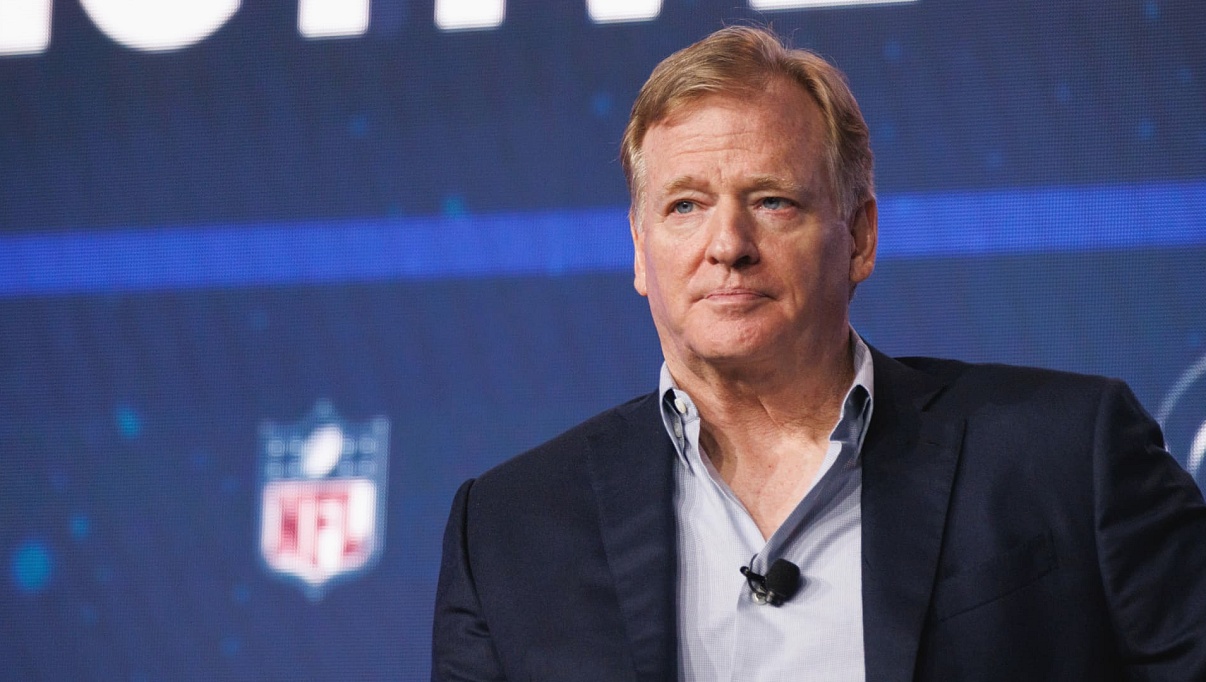
The NFL could significantly restructure the way it sells television and streaming rights when its next round of media negotiations begins, as Commissioner Roger Goodell evaluates how rapidly changing viewing habits are transforming one of the most valuable sports broadcasting businesses in the world.
Goodell indicated that the league may reconsider the structure of its traditional game packages as streaming services become more important and the NFL expands its efforts to reach audiences outside the United States.
His comments came ahead of the league’s first regular-season game in Australia, featuring the San Francisco 49ers and Los Angeles Rams, an event that illustrates how closely the NFL’s international ambitions are becoming connected with its evolving media strategy.
For decades, the league’s broadcasting model has largely been built around clearly defined television windows. Sunday afternoon games are divided between Fox and CBS, NBC controls Sunday Night Football, Disney’s ESPN and ABC carry Monday Night Football, and Amazon holds Thursday Night Football rights.
Netflix has also become increasingly involved, securing five NFL games this season.
But the next media rights cycle could look considerably different.
The NFL has an opt-out opportunity after the 2029-30 season, potentially allowing the league to return to the market and negotiate new agreements at a time when traditional television companies, streaming platforms and global technology businesses are competing aggressively for premium live sports.
NFL Media Rights Could Enter a New Era
Few entertainment properties have maintained the consistent ability to attract enormous live audiences that the NFL has demonstrated.
That makes the league particularly valuable in a media environment where viewers increasingly watch entertainment on demand.
Sports are different.
Fans generally want to watch games live, making major sporting events attractive to broadcasters, advertisers and streaming companies seeking large audiences at specific times.
The NFL has capitalized on that demand by distributing games across multiple media partners.
Its current structure creates several distinct packages, each associated with particular days and time slots.
Sunday afternoon football remains divided between Fox and CBS. NBC controls the league’s marquee Sunday evening package. ESPN and ABC broadcast Monday Night Football, while Amazon has established itself as the home of Thursday Night Football.
Netflix’s growing presence adds another important dimension.
The streaming company has acquired rights to five games this season, demonstrating that major digital platforms are increasingly willing to compete directly with traditional television networks for NFL content.
The 2029-30 Opt-Out Could Be Crucial
The NFL’s existing media agreements include an important strategic mechanism.
At the conclusion of the 2029-30 season, the league has an opportunity to opt out of its current arrangements.
Exercising that option could allow the NFL to renegotiate and resell its media packages rather than waiting for the full agreements to expire.
Goodell has not confirmed that the league will use the opt-out.
However, he emphasized the importance of maintaining flexibility as the media industry evolves.
That flexibility could become extremely valuable.
The media landscape of 2030 may look significantly different from the environment in which the NFL’s current agreements were negotiated.
Streaming platforms continue to gain subscribers, traditional television companies are restructuring their businesses and major technology companies are increasingly interested in live sports.
The opt-out gives the NFL the ability to respond to those changes rather than remaining locked into a distribution model designed years earlier.
Traditional Game Packages Could Be Reconsidered
One of the most interesting possibilities is that the NFL could rethink how individual game packages are structured.
Historically, rights have been organized largely around specific television windows.
But that structure was developed when broadcast and cable television dominated sports consumption.
Streaming changes the equation.
Digital platforms can distribute games nationally or globally without relying on traditional local television infrastructure.
They can also create different subscription models, interactive features and advertising systems.
The NFL could therefore decide that its future rights should be packaged differently.
That does not necessarily mean abandoning familiar Sunday, Monday or Thursday windows.
Instead, the league could reorganize which partners receive particular games, create new streaming packages or develop additional international rights.
The objective would be to match distribution with the way fans actually consume football.
Netflix Signals the Growing Power of Streaming
Netflix’s involvement provides a clear example of how the NFL’s media ecosystem is changing.
The company holds rights to five games this season, expanding its presence in live sports.
It also controls global rights to the 49ers-Rams game in Australia.
That international component is particularly important.
Most NFL media rights remain focused on the United States, where the league generates the overwhelming majority of its television audience.
But Goodell wants the NFL to become substantially more global.
As international games become more common, media partners capable of distributing content simultaneously across multiple countries could become increasingly attractive.
Global streaming platforms have an obvious advantage in that environment.
A service already operating across dozens of countries can potentially promote and distribute an NFL game without requiring separate traditional broadcasting relationships in every market.
International Expansion and Media Strategy Are Converging
The NFL’s international calendar is becoming increasingly ambitious.
This season includes games in markets such as Spain, France, Brazil and Australia.
The Melbourne matchup between the 49ers and Rams represents a particularly important milestone because it is the league’s first regular-season game in Australia.
International expansion creates a new challenge for NFL executives.
Hosting games abroad is only valuable over the long term if those events help create lasting audiences.
That means international broadcasting and streaming distribution become essential.
A fan who attends or watches an NFL game in Australia, Brazil or France needs convenient ways to continue following the league after the event ends.
Streaming could help solve that problem.
Instead of treating international games as isolated events, the NFL can use global platforms to build year-round relationships with overseas audiences.
That could eventually increase the value of international media rights substantially.
Broadcast Television Is Not Going Away
Despite the rapid growth of streaming, Goodell has made clear that traditional broadcast television remains fundamental to the NFL’s strategy.
That distinction is important.
The league has historically prioritized broad accessibility.
NFL games continue to be available on local broadcast television, allowing viewers in relevant markets to watch without requiring a specialized streaming subscription.
Even games distributed nationally through streaming platforms maintain local broadcast availability under the league’s existing model.
This approach helps protect the NFL’s enormous reach.
Moving too aggressively behind subscription paywalls could increase short-term media revenue while potentially limiting access for some fans.
The NFL therefore faces a balancing act.
Streaming provides new technology, global reach and additional bidders for media rights.
Broadcast television provides accessibility and enormous established audiences.
The most likely future model may involve both rather than forcing the league to choose between them.
Simulcasting Could Become More Important
One way to combine traditional television and streaming is through simulcasting.
The same game can be distributed through a broadcast channel while also appearing on a digital platform.
That gives viewers more flexibility.
Fans who still watch traditional television can continue doing so, while consumers who prefer smartphones, tablets, connected televisions or streaming applications can access the same content digitally.
For the NFL, this approach can maximize distribution.
It also allows the league to experiment with new technologies without immediately abandoning the enormous audience still watching conventional television.
As media habits continue evolving, simulcasting could become an increasingly important part of future rights negotiations.
Major NFL Media Partners Are Changing
The timing of the NFL’s potential media renegotiation is especially interesting because several of its current partners are undergoing major corporate transformations.
Paramount is pursuing a $110 billion merger with Warner Bros. Discovery, although the transaction has faced delays related to regulatory scrutiny.
Fox is planning a $22 billion acquisition of Roku, a deal that would significantly expand its position in digital streaming technology.
Comcast, meanwhile, has announced plans to spin off NBCUniversal.
These developments could reshape the competitive landscape surrounding future NFL rights.
Corporate mergers can alter balance sheets, strategic priorities and willingness to spend aggressively on sports.
At the same time, acquisitions involving streaming technology can make traditional media companies more competitive with digital-native platforms.
By the time the NFL’s opt-out becomes available, the ownership and strategic direction of several current media partners could look substantially different.
Competition for NFL Rights Could Intensify
The presence of streaming companies gives the NFL another major advantage: more potential bidders.
Historically, the league negotiated primarily with large television networks.
Today, the universe of potential sports-rights buyers includes global technology and streaming companies with enormous financial resources.
Amazon already controls Thursday Night Football.
Netflix is expanding its NFL relationship.
Traditional broadcasters continue to view football as essential programming.
That creates competition.
For the NFL, competition among media companies can increase the value of rights and provide greater flexibility when deciding how games should be distributed.
The league does not necessarily need to move more games to streaming simply because digital companies are interested.
The threat of competition itself can strengthen the NFL’s negotiating position.
Accessibility Remains a Strategic Priority
Goodell’s comments also suggest that the league is thinking beyond the maximum price media companies are willing to pay.
Accessibility remains important.
The NFL benefits from being culturally ubiquitous in the United States.
Fans encounter games across broadcast television, cable, streaming services, highlights and digital media.
Restricting access too heavily could undermine that advantage.
Future media deals will therefore need to balance several objectives simultaneously: maximizing revenue, maintaining broad domestic reach, expanding internationally and adapting to new viewing habits.
Those priorities do not always align perfectly.
A streaming company may provide global distribution but require a subscription.
A broadcast network may provide free local access but have less international reach.
The NFL’s challenge will be constructing packages that capture the advantages of both.
Global Rights Could Become More Valuable
International audiences represent one of the biggest potential growth opportunities.
The NFL remains far more popular in the United States than in most other countries, but the league is actively attempting to change that.
Regular-season games abroad are one part of the strategy.
Media distribution is another.
If international audiences grow significantly over the next decade, global broadcasting rights could become a much larger component of the league’s media business.
That could favor partners capable of operating across many markets simultaneously.
The Australia game provides an early example of what that future could look like, with Netflix holding global rights to the matchup.
Rather than negotiating only around U.S. television windows, future NFL packages could increasingly consider worldwide audiences from the beginning.
The Next NFL Media Deal Could Look Very Different
The NFL does not need to make an immediate decision.
Its opt-out opportunity does not arrive until after the 2029-30 season, giving the league several more years to monitor how the media industry develops.
That time is valuable.
Executives can study how audiences respond to games on Amazon and Netflix.
They can evaluate whether international events create lasting overseas viewership.
They can observe how corporate changes at Paramount, Fox and Comcast affect the broader sports broadcasting market.
Most importantly, they can track how quickly viewers continue moving from traditional television toward streaming.
By the time negotiations accelerate, the NFL should have substantially more information about what fans want and which media companies are best positioned to provide it.
Goodell’s Strategy Is About Flexibility
The central message from Goodell is not that broadcast television is disappearing or that the NFL has already decided to exit its existing agreements.
Instead, the league wants flexibility.
The media business is changing too quickly for the NFL to assume that the structure that works today will remain optimal several years from now.
Streaming platforms are becoming more important.
International audiences are becoming a larger strategic priority.
Traditional media companies are consolidating and restructuring.
At the same time, free local broadcast access remains one of the foundations of the NFL’s extraordinary domestic popularity.
The league’s next media rights strategy will need to account for all of those factors.
The 2029-30 opt-out gives the NFL an opportunity to do exactly that.
If the league ultimately chooses to renegotiate, the next generation of NFL media packages could become far more flexible, digital and global than anything that came before.
For fans, that could mean more ways to watch football.
For broadcasters and streaming companies, it could trigger an intense competition for one of the most valuable properties in sports.
And for the NFL, it could represent the next major step in transforming America’s dominant sports league into an increasingly global entertainment business.